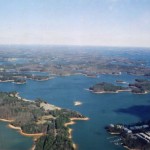
 “When the well’s dry, we know the worth of water,” observed Benjamin Franklin in 1774. Our state certainly understands its worth, as we have been waging a water war with our neighbors for more than two decades. We all remember the devastating drought in 2007 when Governor Perdue declared a water supply emergency in north Georgia when water resources dwindled to a dangerously low level. Georgia has taken steps to manage its water resources by developing a comprehensive drought response plan and a Statewide Water Management Plan. However, the water war reached a boiling point in July when U.S. District Judge Magnuson ruled that water supply, in the form of withdrawals from Lake Lanier, was not a Congressionally-authorized purpose of Lake Lanier. Authorized purposes were hydropower, navigation, and flood control – water supply was only an “incidental benefit.” The Judge delayed enforcement of the ruling for three years to give Congress time to authorize water supply as a purpose for Lake Lanier. At the end of three years, if there is no resolution, the operation of Buford Dam on Lake Lanier will return to 1970s baseline levels. Thus, the required water flow from the dam will be 600 cubic feet per second (cfs) and only Gainesville and Buford will be allowed to withdraw water from the lake (eight million gallons for Gainesville and two million gallons for Buford).
Tri-State Water War Update
September 14, 2009 – 2:31 pm
Combating the H1N1 Flu Virus
September 11, 2009 – 8:32 pm
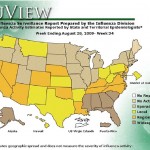 As anyone who has watched or read the news recently is surely aware, state, federal, and world officials have been busy grappling with what could prove to be a substantial challenge to public health across the globe. In April of this year, findings of a new strain of the H1N1 influenza first emerged in Mexico. Since that time, cases have been reported in more than 168 countries throughout the world, and the World Health Organization (WHO) has declared the outbreak to be a pandemic. Although the virus is popularly called the “swine flu,” concern that this term causes confusion about how the virus is spread (there is no danger in eating well cooked pork) has led WHO and other organizations to refer to the virus as “influenza A (H1N1)” instead. In the United States, nearly 70,000 cases of H1N1 flu have been reported this year, with at Read More